The average mainframe expert? Same age. MDM platform specialists? 55. ETL architects who understand your legacy data pipelines? You guessed it.
40% of them are retiring within the next five years.
This crisis has been building in slow motion across enterprises for years. Now the slow motion becomes freefall.
The Math Is Brutal
Here's what the numbers show:
10% of COBOL programmers retire annually. By 2025, the typical RPG programmer will be 70 years old. By 2030, almost all RPG talent will have retired.
Universities stopped teaching COBOL decades ago. As of 2017, only 75 U.S. schools offered it. In 2024, fewer than 2,000 COBOL programmers graduated worldwide.
In the entire University of North Carolina system, across 17 campuses, only one teaches mainframe technology.
The pipeline isn't drying up. It's already dry.
Gartner's Warning Nobody Wants to Hear
Gartner predicts 60% of modernization efforts will be delayed by 2025 due to lack of legacy skills. Not outdated technology. Not budget constraints.
Missing people.
70% of modernization projects will stall because no one's left who understands the systems you're replacing.
This happens in enterprises around the world. A data expert gets laid off, retires, or moves on. Suddenly no one knows how to create the report the board needs. The expert used to pull data from 17 different sources and compile it in four days.
Now the person is gone. The board meeting is next week. Your team is scrambling.
The Knowledge Transfer Crisis
42% of critical business knowledge is at risk when key personnel retire. For legacy systems, the number jumps higher.
Over 70% of Fortune 500 companies rely on legacy systems for core operations. Mainframes. Custom-built ERPs. Vertical data warehouses.
These systems are mission-critical. The people who built and maintained them are gone.
The majority of legacy applications lack adequate documentation. The knowledge lives in people's heads. When they walk out the door, it vanishes.
The Financial Reality
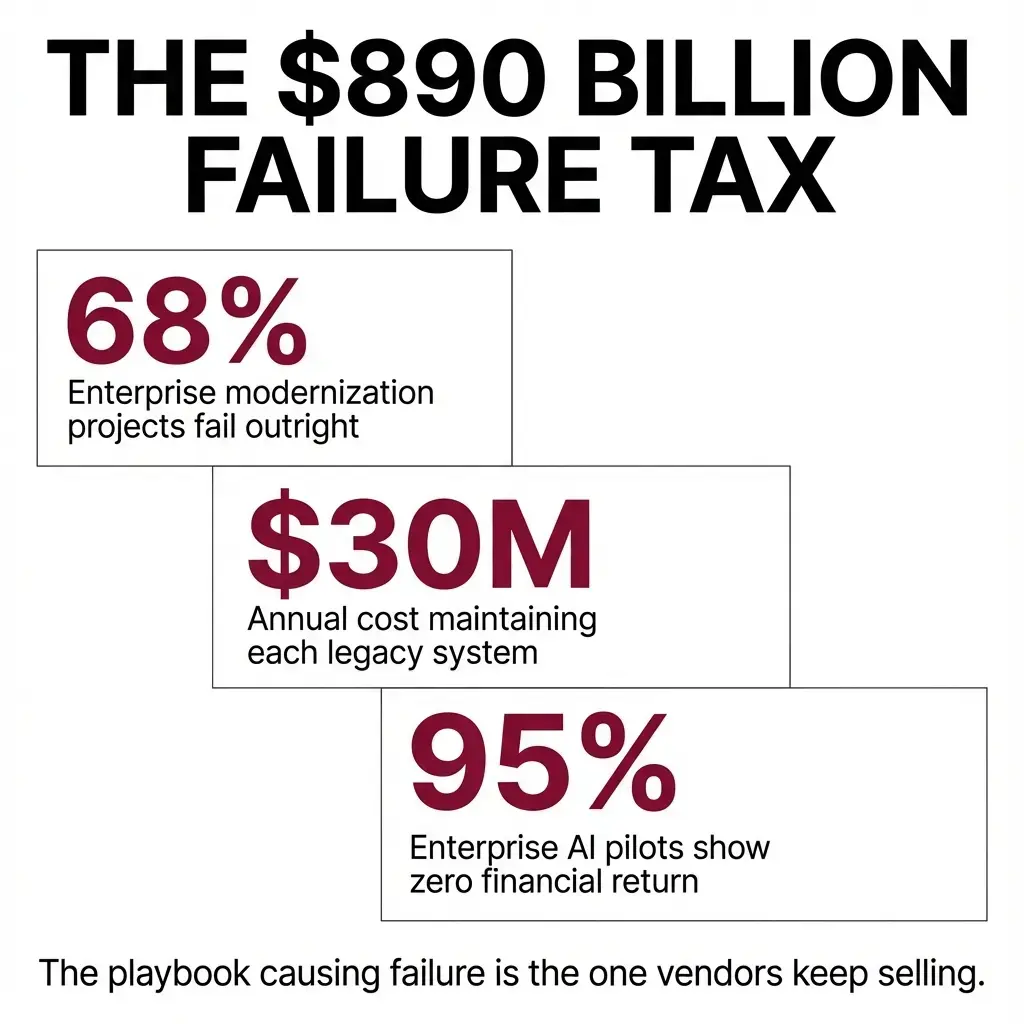
Organizations spend 60-80% of their IT budgets maintaining existing systems. Capgemini reports enterprises spend $3.61 million annually to keep legacy systems alive.
Not modernize them. Keep them running.
Almost half of organizations say legacy maintenance costs exceeded expectations in the last year. And the talent is available today.
What happens when you find no one to do the maintenance at any price?
The 10-15 Year Countdown
Experts warn of a shortage of COBOL programmers within the next 10 to 15 years. Organizations are at a critical juncture where they need new onboarding models to maintain a mainframe workforce.
But schools teaching mainframe technology aren't increasing.
Traditional recruiting won't fix a gap you're no longer able to fill. If you're posting roles asking for "10+ years of mainframe experience," who's left to apply?
Government Systems Show What's Coming
The U.S. Government Accountability Office reports 80% of federal IT budgets go toward maintaining legacy systems.
Critical government systems rely on COBOL, Fortran, and specialized mainframe environments. These disappeared from education curricula years ago.
Agencies failing to modernize risk being left without vendor support or compatible talent pools.
The federal government has unlimited resources. If they struggle with this problem, your enterprise will too.
What This Means for You
You have a window. It's closing.
The talent shortage affects both internal IT departments and external consulting markets. You won't outsource your way out of this. The consultants are aging out too.
The warning signs have been visible for years. The difference between 2020 and 2029 is simple. In 2020, organizations could find the expertise if they paid enough.
By 2029, the expertise doesn't exist at any price.
The Path Forward
You need solutions requiring no infrastructure replacement and no rare talent.
You need systems learning from your existing experts while they're there. Systems capturing tribal knowledge before it walks out the door. Systems teaching the next generation instead of expecting them to reverse-engineer decades of undocumented decisions.
This isn't a warning. It's a countdown.
The question isn't whether you'll address this. The question is when. Will you address it while you have experts who help you transition, or after they're gone and you're maintaining systems nobody understands?
The clock is ticking. Every retirement notice brings you closer to a crisis you won't hire your way out of.