

Know the inputs.
Identify the sources, definitions, and planning period behind the scenario.
For finance, commercial & planning teams
Compare pricing, promotion, and supply scenarios before committing budget or capacity. See the likely outcomes, assumptions, and constraints—with your team in control.
Aevah manages the data and analytical work behind the decision.


Explore Decision Pre-flight
Change the plan. Compare the impact on contribution and demand. See the constraint before it becomes a commitment.
Grounded in your businessFinance & ERP · Sales & promotions · Inventory & production · Relevant market signals
01 / Change an assumption
Test a different window or investment. Check the plan against available supply.
02 / See the tradeoffs
This scenario fits the supply assumption. Your team still reviews the commercial case.
03 / Your team reviews. Your team decides.
Ask why. Change the assumptions. Test what happens next.
Explore the decision workflowFrom executive review to analyst drill-down
A useful scenario makes its reasoning inspectable. Know what went into the answer, what could change it, and who owns the next move.
Explore Security & Trust ↗Identify the sources, definitions, and planning period behind the scenario.
See what changed, what stayed constant, and where the model has limits.
Evaluate budget, capacity, and service constraints alongside uncertainty supported by the analysis.
Agree the reviewer, approval requirements, and measures for comparing expectations with actual outcomes.
Start with the decision that matters
Start with one team and one use case. Connect the wider business as the work requires it.
Finance & FP&A
Connect sales, costs, and product mix. Compare the financial effect of a pricing or promotion decision before committing.
Explore financeCommercial & revenue growth
Evaluate price, promotion, and product options with contribution, customer response, and available supply in view.
Explore commercial decisionsPlanning & operations
Bring demand, inventory, and capacity together. Surface the constraints and compare feasible changes to the plan.
Explore planningOperational Data Science · The foundation underneath
Your business doesn’t operate in a closed dataset. Relevant external signals belong alongside your operational data.
Sales · Product costs · Promotions
Inventory · Production · Finance
Commodity costs · Fuel prices
Weather · Relevant market signals
Aevah
Connect and prepare the inputs. Build and validate the analysis. Keep the working experience current.
Decision Pre-flight
Your people retain authority.
Sources and analytical methods are selected and validated for the agreed decision.
See what powers Pre-flight →Implementation patterns
Review the scope and acceptance measures behind current implementation and evaluation patterns.
A rapidly growing consumer-products manufacturer is introducing new products while operating near available production capacity. FP&A needs to understand demand early enough to guide adoption, margin, and production choices together.
The production scope and acceptance measures are established. Realized performance will be reported only after the agreed baseline and observation period are complete.
A commercial organization needs pricing, promotions, customer response, product mix, and margin economics to meet inside one accountable decision path instead of separate reports and models.
This pattern describes an active decision scope, not a published customer outcome or universal commercial result.
An enterprise sourcing function needs to connect suppliers, contracts, commodities, logistics, quality, continuity, and product economics before cost actions create downstream operating risk.
This is an evaluation pattern. The specific decision, source access, analytical method, and acceptance measures must be agreed before delivery.
These patterns describe scope and evaluation criteria. They are not published customer results.
Review the implementation detail ↗First Flight · How you start
Choose a decision worth improving. Agree the inputs, owner, success measures, and working scope before implementation begins.
The data and analytical work behind the agreed use case.
The business context and ownership that make the work useful.
A scope you can evaluate before deciding whether to expand.
For a promotion-planning start, useful inputs may include sales, trade spend, product cost, inventory, and capacity. The exact scope depends on your systems and data readiness.
See the engagement modelUse-case complexity, the number and condition of data sources, deployment and access requirements, and adoption support shape the scope. Commercial terms, timing, service expectations, and responsibilities are agreed for your engagement.
Review the commercial evaluation →Built around your control
Make the operating boundaries part of the implementation, from who can see the data to who can approve a change.
Explore Security & TrustChoose an Aevah-managed, self-hosted, or sovereign deployment path for your requirements.
Deployment optionsUse your organization’s identities and permissions to determine who can access data and act.
Identity and accessDefine which actions need review, who can approve them, and how exceptions are handled.
Approvals and AI controlsReview the source context, permissions, approvals, and history behind governed work.
Audit and evidenceThe conversation continues
Perspectives, practical guides, and questions for leaders putting data and AI to work.
All insights & blog posts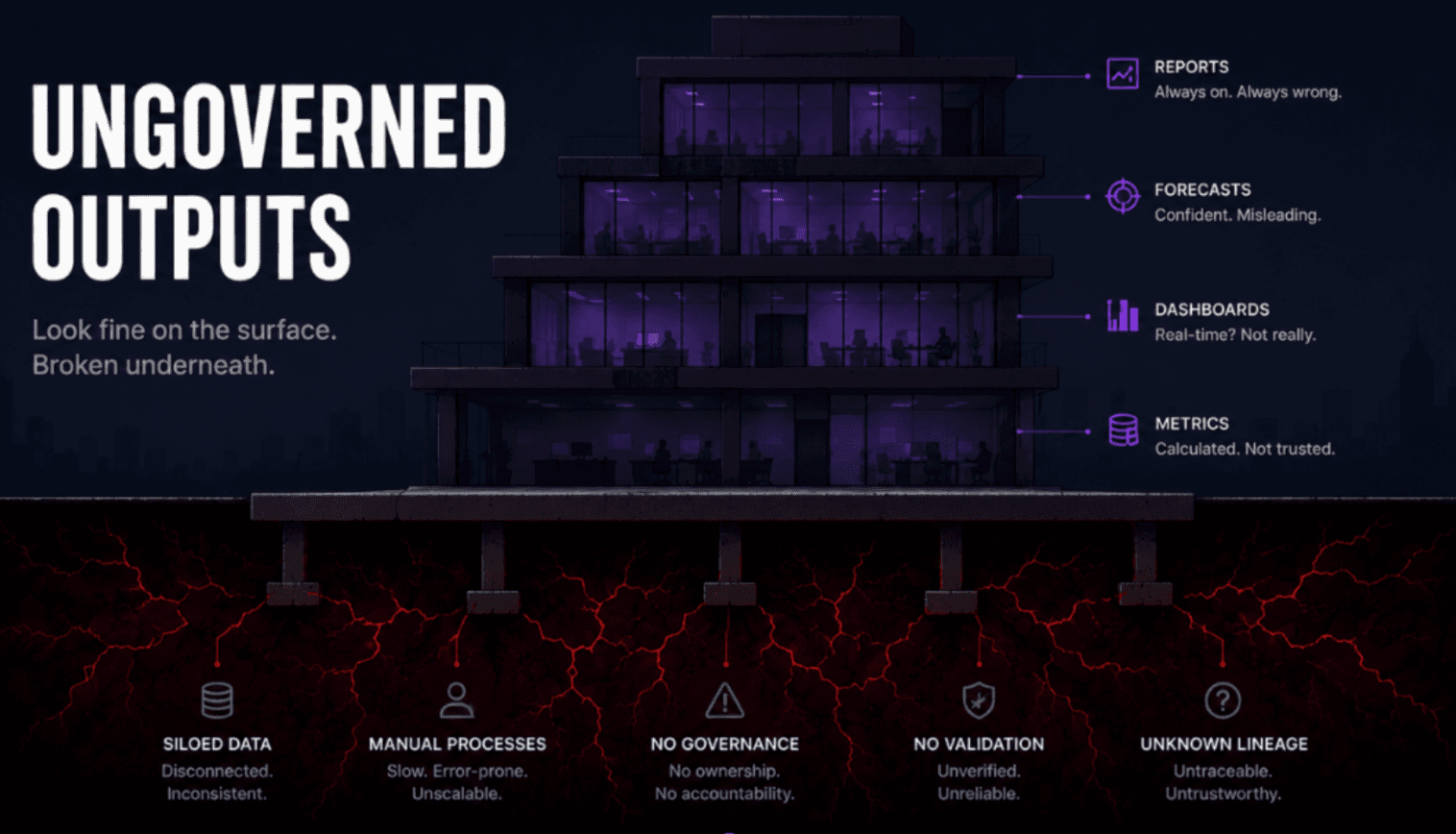
Ungoverned AI in finance is not just an IT risk. It is a fiduciary one. When a board asks how an AI-driven financial recommendation was made, the answer either traces cleanly to governed data — or it does not.
Read the insight ↗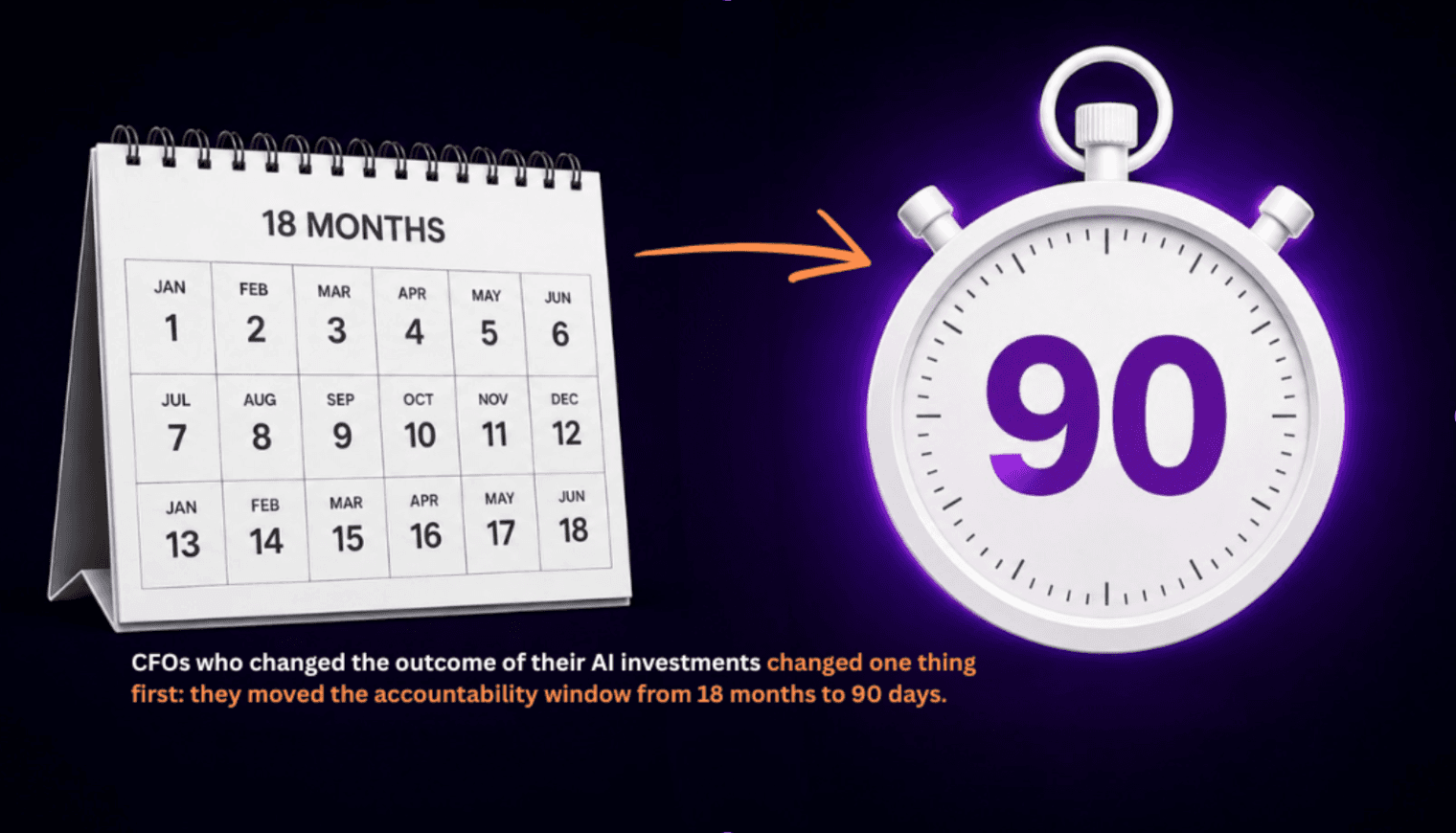
If a vendor cannot show you a measurable result in 90 days, ask why. Then ask it again. The 18-month implementation timeline is not a technical requirement — it is a commercial structure that protects the vendor, not the buyer.
Read the insight ↗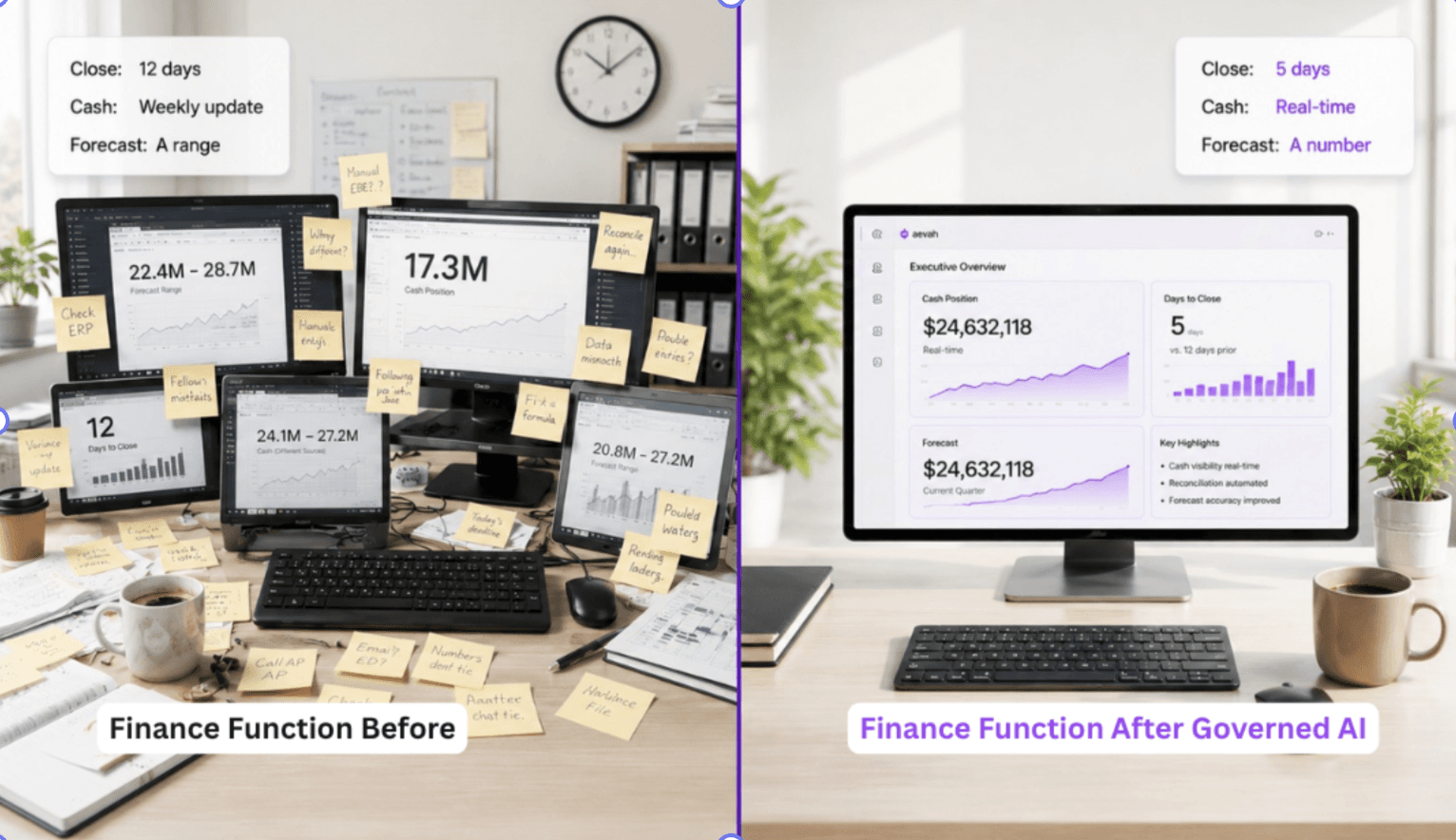
Not a vision piece. A practical look at what changes — operationally, relationally, and strategically — in the finance functions that got the implementation right.
Read the insight ↗Explore briefs, playbooks, and evaluation guides to use with your team.
Choose a useful next step
Answer a few business questions. Get a preliminary Value Brief with a priority, likely owner, useful data, and measures to share with your team.
Build my Value Brief No email required. Copy, print, or save your brief.Bring the decision you need to improve and the systems behind it. Discuss a starting scope, what your team would need to provide, and how to evaluate progress.
Book a conversation For business owners and their implementation teams.